Supported by the CMEDIA Project, Wole Soyinka Centre for Investigative Journalism (WSCIJ), and MacArthur Foundation
Purpose of the Toolkit
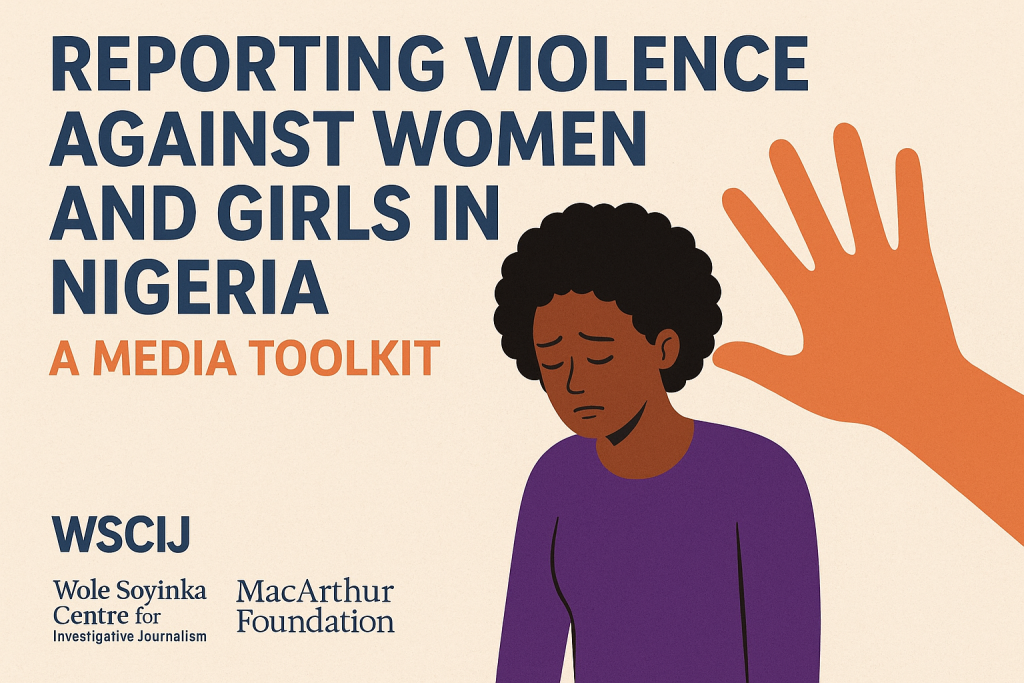
This toolkit is designed to support Nigerian journalists in reporting on Violence Against Women and Girls (VAWG) ethically, sensitively, and effectively. It equips reporters to:
- Tell stories that respect survivor dignity.
- Educate the public and challenge harmful norms.
- Advocate for systemic change through responsible journalism.
This media toolkit, developed under the CMEDIA project with support from the Wole Soyinka Centre for Investigative Journalism (WSCIJ) and the MacArthur Foundation, provides practical guidance for Nigerian journalists on reporting Violence Against Women and Girls (VAWG).
The toolkit emphasizes ethical, sensitive, and effective reporting that protects survivor dignity, challenges harmful social norms, and fosters systemic change. It covers the forms and prevalence of VAWG, outlines Nigeria’s legal frameworks, and offers practical tools on interviewing survivors, fact-checking, data use, and visual reporting.
It also highlights the role of the media in shaping public opinion, presents case studies and best practices, and provides strategies for collaboration with NGOs, survivor networks, and legal experts. Challenges such as editorial pressure, journalist safety, censorship, and data access are addressed with actionable solutions.
Key recommendations include:
- Upholding ethical standards and survivor-centered reporting.
- Using data-driven approaches to uncover systemic issues.
- Strengthening collaboration with stakeholders.
- Promoting media literacy and public engagement to drive societal change.
This toolkit is a practical resource for journalists—helping them report responsibly, amplify survivor voices, and drive meaningful change.