
Introduction
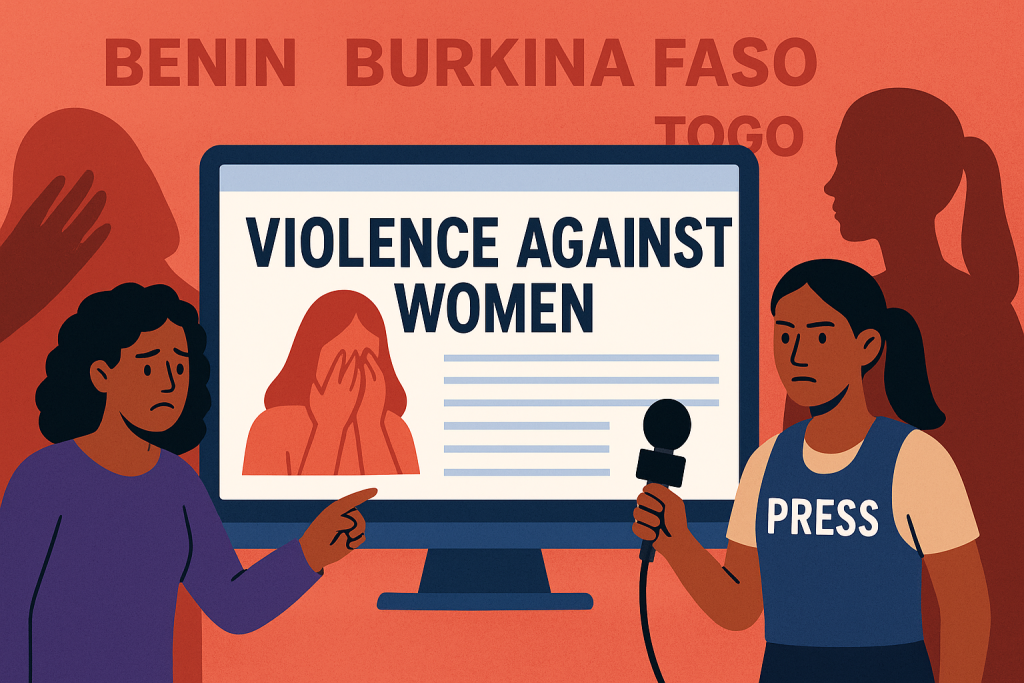
This toolkit provides a concise analysis of how violence against women and girls (VAWG) and violence against women journalists (VAWJ) are reported in Benin, Burkina Faso, and Togo. Drawing on rigorous research, it highlights the shortcomings of current media coverage and offers actionable recommendations to improve reporting practices and protect women journalists.
The Challenge
Although laws exist to combat VAWG in all three countries, weak enforcement, entrenched patriarchal norms, and institutional gaps allow violence to persist. The media has a vital role in shaping public understanding of these issues, yet coverage often:
- Focuses on isolated incidents instead of systemic problems.
- Uses sensationalist framing with little context.
- Neglects psychological, economic, and digital dimensions of violence.
At the same time, women journalists face widespread discrimination and violence in their profession—from harassment and bullying to pay gaps and career stagnation—making it harder for their voices to shape fair and balanced reporting.
Scope of the Research
The study examined:
- How VAWG is represented in media coverage across the three countries.
- The experiences of women journalists, including the forms of violence they face and how these impact their work and careers.
While the research draws on insights from women journalists, it does not include direct survivor testimonies. It also identifies gaps in reporting on issues such as child marriage, female genital mutilation (FGM), and incest.
Key Recommendations
To strengthen reporting and support women in the media, the toolkit proposes:
- Specialized training for journalists on VAWG reporting to improve accuracy and sensitivity.
- Stronger editorial protocols that prioritize the safety of survivors and journalists.
- Broader coverage that includes non-physical forms of violence, including economic, psychological, and online abuse.
- Improved access to conflict zones for balanced and comprehensive reporting.
- Workplace protections to address harassment, sexism, and discrimination in the media industry.
- Stricter enforcement by media regulators to uphold ethical standards and accountability.
Conclusion
Current reporting on VAWG in Benin, Burkina Faso, and Togo often reinforces harmful stereotypes, normalizes violence, and overlooks critical dimensions of abuse. Women journalists face additional barriers that silence their perspectives and limit their career growth.
By adopting the recommendations outlined in this toolkit, media actors and institutions can contribute to more ethical, informed, and sensitive reporting that protects both survivors and journalists.
For detailed analysis and country-specific strategies, please read the full research document and consult the country toolkits attached.