
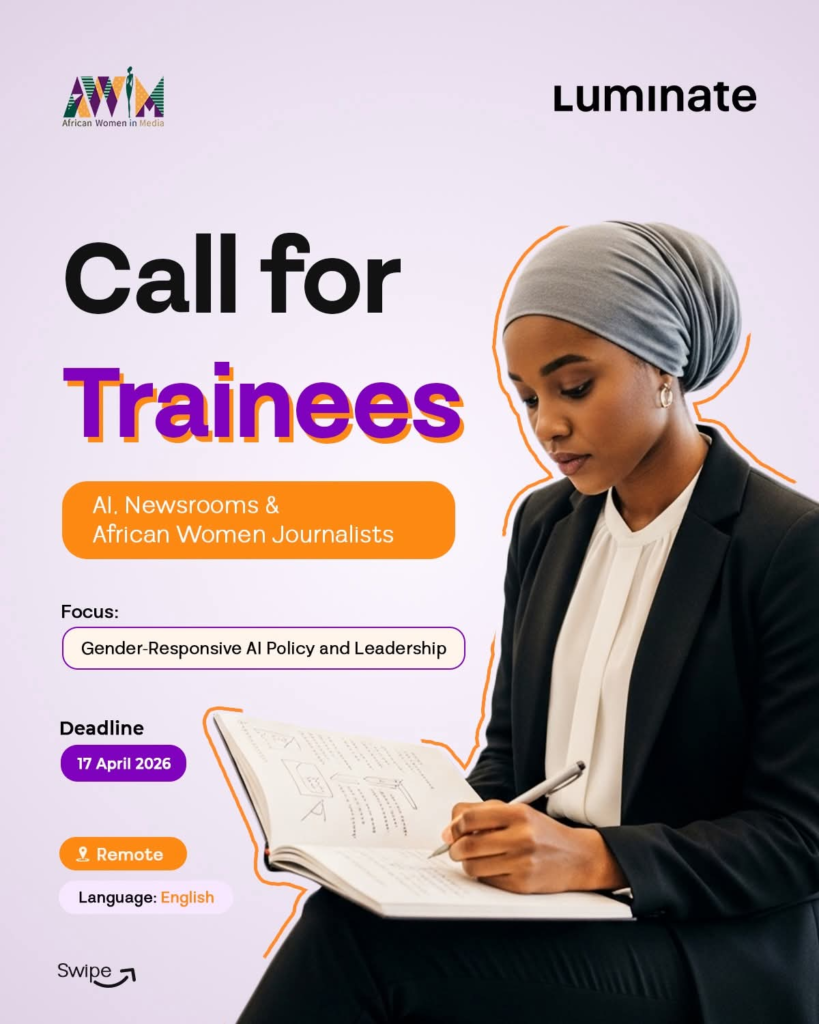

AWiM’s recently concluded research report on the gendered impact of artificial intelligence within African newsrooms highlights how technological adoption intersects with existing social inequalities. Through interviews, focus groups, and surveys, the study reveals that women often perform invisible labour by teaching themselves AI tools despite a lack of formal organisational support. The findings identify significant technological trust gaps and safety concerns, noting that AI can reinforce sexist stereotypes or increase the risk of online harassment for female journalists.
In response to the issues highlighted in the research report, AWiM has created specialised capacity-building and training initiatives to foster technical leadership among women. The three courses that are part of this training are:
- Gender-Responsive AI Policy and Leadership
- Cultural Localisation and African-Centric Design of AI tools
- AI Literacy and Technical Mastery for women in media.
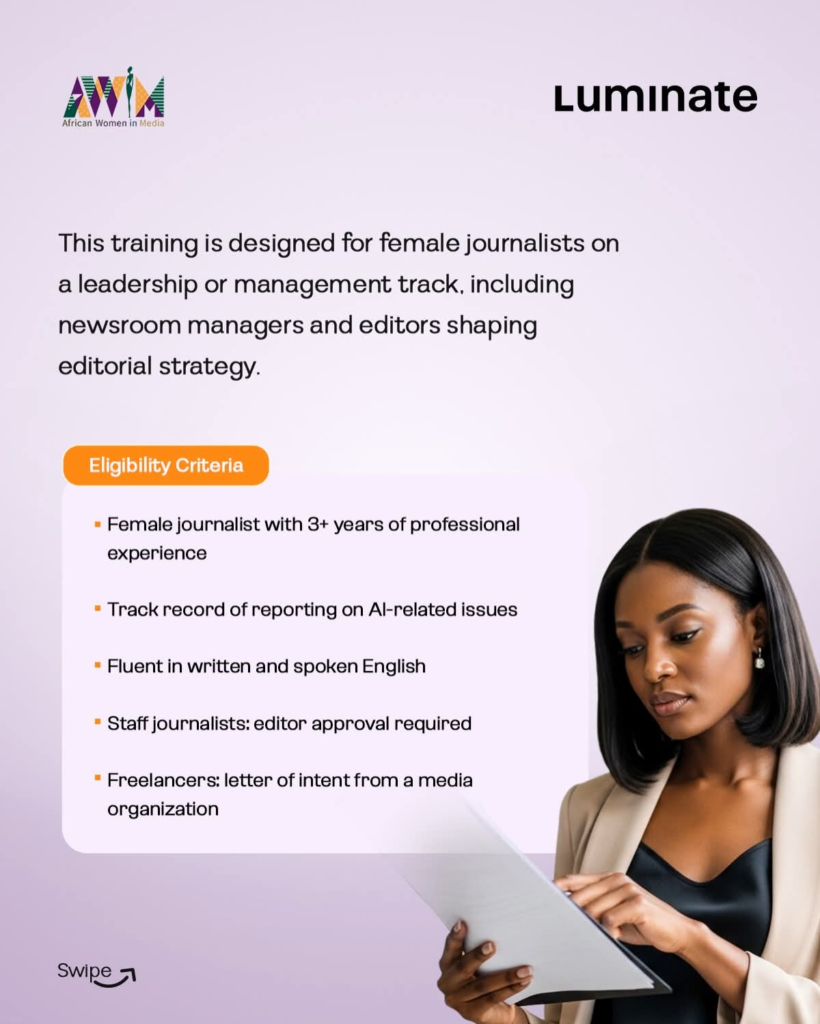
Eligibility Criteria
To be considered for the AI, Newsrooms and African Women Journalists training, applicants must meet
the following strict criteria:
Professional Experience & Identity
- Gender: You must identify as a female journalist.
- Experience: You must have a minimum of three years of professional experience in journalism.
- Specialization: You must have a specific track record of reporting on AI-related issues.
- Language: You must be fluent in both written and spoken English.
Institutional Affiliation & Support - For Staff Journalists: You must be currently employed by or affiliated with a media organization
and provide written approval from your editor to participate. - For Freelancers: You must identify at least one media organization committed to publishing the
content you produce during this project. A letter of support and intent to publish from that
organization is required upon selection.
Project Pitch (Mandatory)
You must submit a story pitch (maximum 150 words) that you will develop using the technical skills
gained during the training. Your pitch must meet these standards:
- Your story pitch must focus on the intersection of Artificial Intelligence and Journalism,
specifically addressing one of the following areas:- The Gendered Impact of AI: Investigating how AI adoption in African newsrooms creates
or bridges gaps for women, such as the “invisible labour” of self-teaching or gendered
safety concerns like online harassment. - Algorithmic Bias & Representation: Analysing how AI tools might reinforce sexist
stereotypes, glass ceilings, or historical biases in editorial decisions and content
distribution. - Cultural & Linguistic Localisation: Exploring the use of AI in “Low-Resource Languages,”
indigenous language preservation, or the challenges of using Global North AI models in
an African context. - AI Ethics & Governance: Focusing on the need for gender-responsive policies, algorithmic
- transparency, or the ethical use of automated tools for hiring and promotion within the media
- houses.
- Technical Mastery & Innovation: Reporting on the transition from basic AI literacy to
technical leadership, such as the use of prompt engineering, audio-to-text forensics, or
automated fact-checking in investigative journalism. - Violence Against Women and Girls (VAWG): While the technical focus is AI, your pitch
must use these AI lenses to tell a story related to violence against women and girls.
- The Gendered Impact of AI: Investigating how AI adoption in African newsrooms creates
- Originality: The work must be original and not a reprint.
- Core Components: The pitch must clearly define your angle/thesis, the form (e.g., essay,
interview, criticism), the expected word count, and your deadline. - Writer’s Background: You must explain why you are the right person to cover this specific story.
Location: Remote l Language: English
Application Deadline: 17 April 2026
To be part of this 6-week intensive and immersive training, please apply here.